 Pinterest
 My neighbor Marcus taught me this soup on a cold February afternoon when he realized I'd never had proper ham and red bean soup. He showed up at my door with a ham hock wrapped in butcher paper, insisting that Monday suppers in New Orleans weren't just about feeding yourself—they were about tasting history. Watching him work through the recipe with such calm confidence, I understood why this dish has survived generations of Cajun kitchens.
I made this for my book club last spring, and what started as dinner turned into a three-hour conversation about family recipes and where food really comes from. One guest mentioned her grandmother made something nearly identical in Mobile, Alabama, and suddenly everyone was sharing their own versions of this soup. By the end of the night, we had seven different stories about red beans, and somehow mine had become part of that tapestry.
Ingredients
- Smoked ham hock or bone: This is where the entire soul of the soup lives—don't skip it for diced ham alone, because you need those deep, savory notes that only come from slow-cooking bone marrow and collagen.
- Diced smoked ham: Adds texture and another layer of smokiness that keeps building as everything simmers together.
- Dried red beans: Soak them overnight without fail; rushing this step means uneven cooking and grainy beans instead of that creamy texture you're after.
- Yellow onion, green bell pepper, celery: This holy trinity forms the backbone—they soften into the broth and become almost invisible, which is exactly the point.
- Garlic: Three cloves is the minimum; it mellows significantly during the long cook and adds warmth rather than sharpness.
- Chicken stock: Use low-sodium because you're controlling the salt, and the smokiness of the ham will do the heavy lifting on flavor.
- Smoked paprika, cayenne, thyme, oregano: These aren't arbitrary—they work together to build a flavor profile that tastes both bold and balanced, not one-note or overwhelming.
- Bay leaves: Two of them, and remember to fish them out before serving because biting into one is genuinely unpleasant.
- White pepper: Optional but worth keeping on hand; it adds a different kind of heat than black pepper, more subtle and almost floral.
Tired of Takeout? 🥡
Get 10 meals you can make faster than delivery arrives. Seriously.
One email. No spam. Unsubscribe anytime.
Instructions
- Build Your Flavor Base:
- Heat oil in your pot over medium heat, then add the onion, bell pepper, and celery. You're listening for a gentle sizzle, not an aggressive sear—this should take 5 to 7 minutes, and you want everything just softened and starting to release its sweetness. The kitchen will smell like the beginning of something good.
- Wake Up the Garlic:
- Once the vegetables have softened, stir in the garlic and let it cook for just one minute—you want fragrant, not burned. If you smell anything bitter or sharp, you went too far.
- Layer In the Main Players:
- Add the drained beans, ham hock, diced ham, bay leaves, and all your seasonings. This is when you're committing to the flavor profile, so resist the urge to hold back on the spices. Everything goes in at once so it all gets acquainted during the long cook.
- Add Liquid and Begin the Wait:
- Pour in the stock, bring everything to a boil, then reduce heat to low and cover partially. The partial cover lets some steam escape while keeping most of the moisture inside—this matters more than you'd think for the final texture.
- Let Time Do the Work:
- Simmer for 2 hours, stirring occasionally so nothing sticks to the bottom. Around the 1-hour mark, check a bean by tasting one; it should still have some firmness but be heading toward tender. You're aiming for that creamy, almost melting texture, not mushy mush.
- Rescue the Meat from the Bone:
- When the ham hock is falling apart at the slightest touch, remove it carefully and let it cool just enough to handle. Shred any meat clinging to the bone, return it to the pot, and discard the bone and excess fat. This step feels like you're performing surgery, but it's worth the attention.
- Taste and Adjust:
- Before you serve, taste the soup and decide if it needs more salt, pepper, or a dash of hot sauce. The flavors will be mellow and integrated by now, so you might be surprised at how much seasoning you actually want.
- Serve with Purpose:
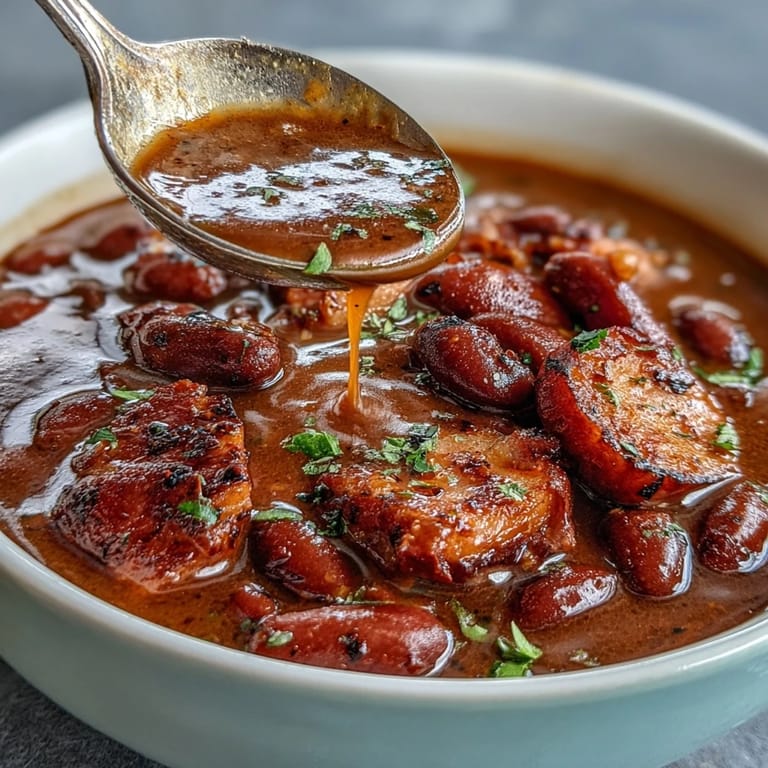
- Ladle the soup over a bed of cooked white rice, letting the rice absorb all that beautiful broth. Finish with green onions and parsley so you get some freshness cutting through the richness.
 Pinterest
 I realized this soup had become something special to me when my daughter asked if we could make it twice a month instead of just once. She said it was the one meal where she'd eat slowly, really tasting each spoonful, which isn't something she does with much anymore.
The Cajun Connection
Monday suppers aren't arbitrary in Cajun tradition—they're rooted in practicality and wisdom. After a long Sunday of cooking, families would use leftover ham bones and dried beans to create something that fed everyone without requiring much active attention. What started as resourcefulness became a cornerstone of the cuisine because it's honestly just that good. Every time you make this, you're participating in a tradition that stretches back generations, which is humbling to think about while you're standing at the stove.
When to Add Andouille Sausage
If you want to push the smokiness even further, slice up some andouille sausage and brown it in a separate skillet before adding it to the pot. The key is cooking it separately first so you get those caramelized edges and concentrated flavor, then letting it mingle with everything else in the last 30 minutes of simmering. This isn't traditional, but it's not unwelcome in a kitchen that respects the source material enough to play with it.
Stretching It and Storing It
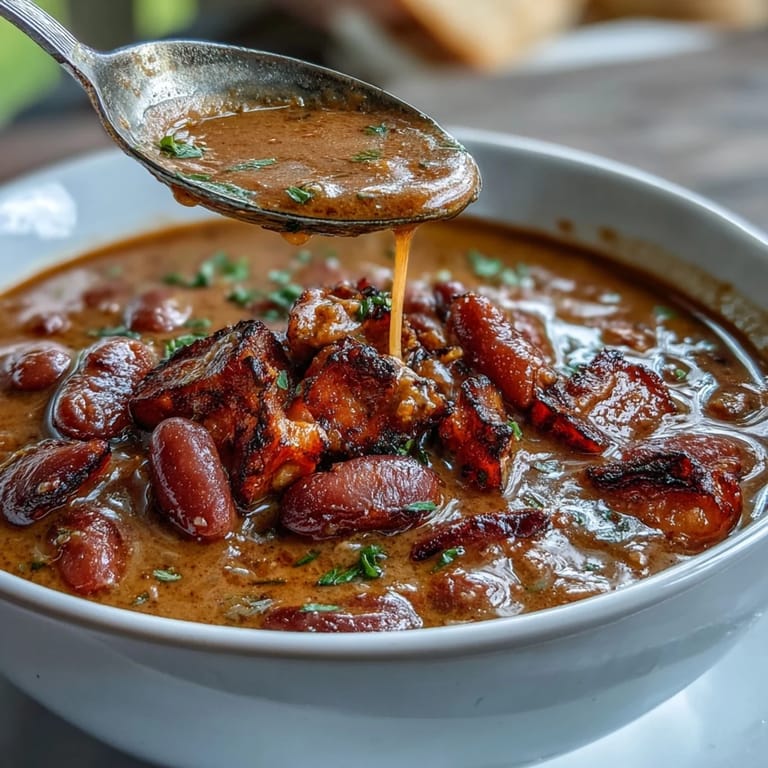
One of the best things about this soup is how generous it is with leftovers—in fact, it's better the next day once all the flavors have gotten to know each other overnight. You can stretch a batch across the week by reheating portions and serving over fresh rice each time, which means you're never eating the exact same thing twice. Store it in airtight containers for up to four days, though honestly I've never had any last that long in my house.
- Pair it with cornbread or crusty French bread to soak up every drop of that incredible broth.
- If the soup thickens too much after sitting, just add a splash of stock or water when reheating.
- Freeze portions if you want to preserve it longer—it keeps beautifully for up to three months.
 Pinterest
 This soup is proof that the most nourishing meals often come from the simplest ingredients treated with respect and time. Make it when you need comfort, when you want to share something real with people you love, or just because your kitchen deserves to smell this good.
Recipe FAQs
- → Can I use canned beans instead of dried beans?
While dried beans offer the best texture and flavor, canned beans can be used to save time. Adjust cooking by shortening simmer time and rinse canned beans well before adding.
- → What cuts of ham work best for this dish?
Smoked ham hocks or leftover ham bones impart the deepest smoky flavor. Diced smoked ham adds tenderness and richness.
- → How can I thicken the soup?
Mashing some beans against the pot’s side during cooking releases starch, naturally thickening the broth without added thickeners.
- → Is it possible to make this dish spicier?
Yes, increase the cayenne pepper or add hot sauce to taste for a bolder kick suited to your preference.
- → Can I add other meats for more flavor?
Adding sliced andouille sausage browned beforehand complements the smoky ham and deepens the overall flavor.
- → What side dishes pair well with this meal?
Serve alongside cooked white rice, cornbread, or crusty French bread for a classic and satisfying combination.