 Pinterest
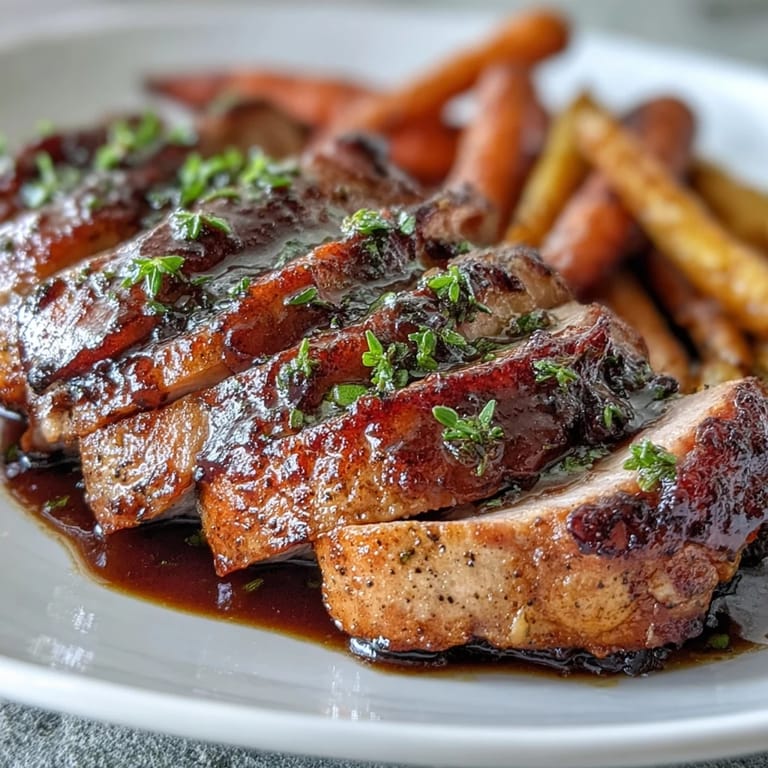
 There's something about the way a pork tenderloin browns in a hot oven that makes the whole kitchen smell like something special is happening. My mom used to make this for Sunday dinners, except hers took hours and involved multiple pans scattered across the stovetop like some kind of culinary battlefield. One evening I was in a rush, had twenty minutes before guests arrived, and decided to throw everything on one sheet with those beautiful rainbow carrots from the farmers market. The honey-balsamic glaze caramelized into this glossy mahogany coating while the carrots turned sweet and jammy at the edges, and somehow that hasty improvisation became my go-to dinner now.
I made this for my partner's parents last spring, and there was this moment where his mom tasted it and got quiet, the kind of quiet that happens when someone's thinking about flavor combinations that just work. She asked if I'd roasted the carrots separately, genuinely surprised it was all one pan. That little detail stuck with me because it reminded me that simple doesn't mean boring if you pay attention to how things caramelize together.
Ingredients
- Pork tenderloin: Trimming the silver skin makes all the difference for texture, and letting it come to room temperature for ten minutes before cooking helps it cook more evenly through the center.
- Olive oil: Quality matters here since it coats the meat directly and flavors the pan juices you'll drizzle over everything.
- Kosher salt and freshly ground black pepper: These aren't afterthoughts; they're the foundation for seasoning both the pork and vegetables with intention.
- Honey: Raw or regular both work, but raw honey adds a floral note that feels more sophisticated without extra effort.
- Balsamic vinegar: Get the real stuff if you can; the cheap versions taste thin and one-dimensional compared to aged balsamic that's been slowly reduced.
- Dijon mustard: This emulsifies the glaze and prevents it from separating, plus adds a subtle sharpness that balances the sweetness.
- Garlic and thyme: Fresh thyme is ideal if you have it, but dried works perfectly well and sometimes even more concentrated.
- Rainbow carrots: Any carrots work, but these colorful ones make the dish visually worth the effort and taste slightly sweeter than regular orange ones.
Tired of Takeout? 🥡
Get 10 meals you can make faster than delivery arrives. Seriously.
One email. No spam. Unsubscribe anytime.
Instructions
- Heat your oven and prep your pan:
- Set the oven to 425°F and line a large baking sheet with parchment or foil—you'll thank yourself when cleanup is just tossing the paper. This high heat is what creates that caramelized finish on both the pork and carrots.
- Arrange the carrots:
- Toss the halved carrots with oil, salt, and pepper, then spread them around the edges of your sheet, leaving the center bare. They need space to cook properly and won't steam if they're crammed too close together.
- Season the pork generously:
- Dry the tenderloin with paper towels first because moisture is the enemy of browning. Rub it with oil and season all over with salt and pepper like you mean it.
- Make your glaze:
- Whisk the honey, balsamic, mustard, garlic, and thyme together in a small bowl until it's smooth and glossy. This is where the magic happens—that combination of sweet, tart, and savory.
- First roast with half the glaze:
- Brush half the glaze on the pork and put everything in the oven for 15 minutes. You'll start smelling it around minute twelve, and that's when you know it's working.
- Glaze and finish:
- Pull the pan out, brush on the remaining glaze, and roast for another 10 to 15 minutes until the pork hits 145°F internally. The carrots should be tender with caramelized edges.
- Rest and serve:
- Let the pork rest for five minutes on a cutting board—this keeps it juicy when you slice it. Serve everything with the pan juices spooned over top.
 Pinterest
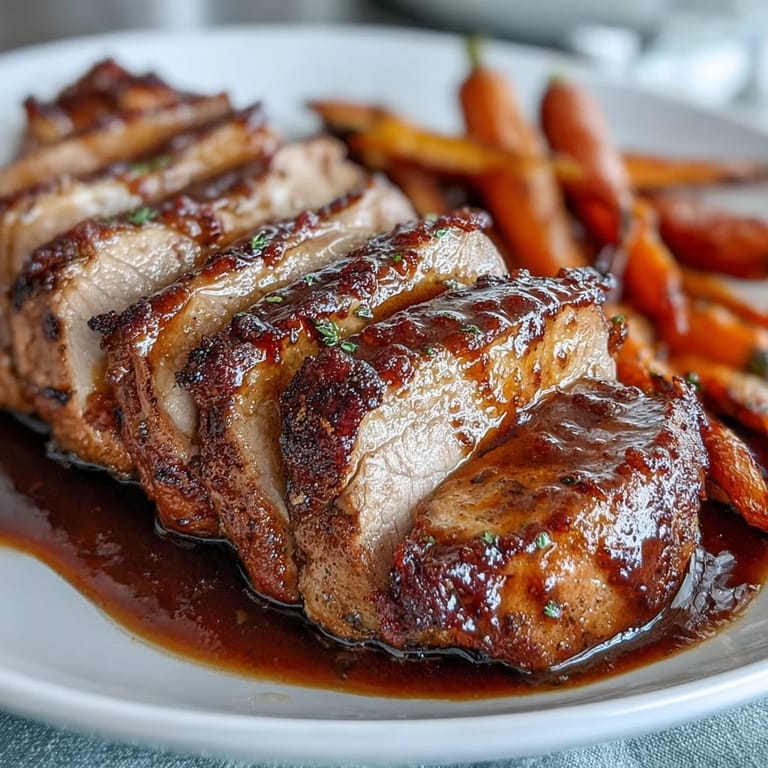
 There's something about plating this dish that feels almost celebratory—the pork slices arranged down the center with those jewel-toned carrots scattered around them, the sauce pooling on the plate. My partner actually put his fork down mid-bite once and just looked at the plate, and I realized that food this good becomes a moment you want to linger in.
The Science Behind the Glaze
The honey-balsamic combination works because honey's sweetness plays against balsamic's acidity in a way that feels balanced rather than cloying. The Dijon mustard acts as an emulsifier, helping the oil and vinegar stay together instead of separating, which means your glaze clings to the pork instead of sliding off. When the pork roasts, this glaze caramelizes on the surface, creating that deep mahogany crust that looks restaurant-quality.
Why This Works as a One-Pan Dinner
The key is that pork tenderloin and carrots have almost identical cooking times, which is why they live together so peacefully on one sheet. Carrots actually appreciate the high heat because it concentrates their natural sugars and creates those caramelized edges that taste almost like candy. By the time the pork reaches safe internal temperature, the carrots are tender, the glaze is set, and everything looks like you actually knew what you were doing.
Serving and Pairing Suggestions
This dish pairs beautifully with a light wine like Pinot Noir because the acidity cuts through the richness of the pork while echoing the balsamic notes in the glaze. Simple sides work best—maybe a green salad with lemon vinaigrette or creamy polenta if you want something more substantial. The pan juices are liquid gold, so don't pour them out; spoon them over everything.
- A Pinot Noir or light Burgundy wine brings out the savory notes without overwhelming the honey sweetness.
- Crusty bread on the side means nobody will miss out on capturing those last drops of glaze from the plate.
- If you're cooking for someone who skips vegetables, these carrots might be the ones that change their mind.
 Pinterest
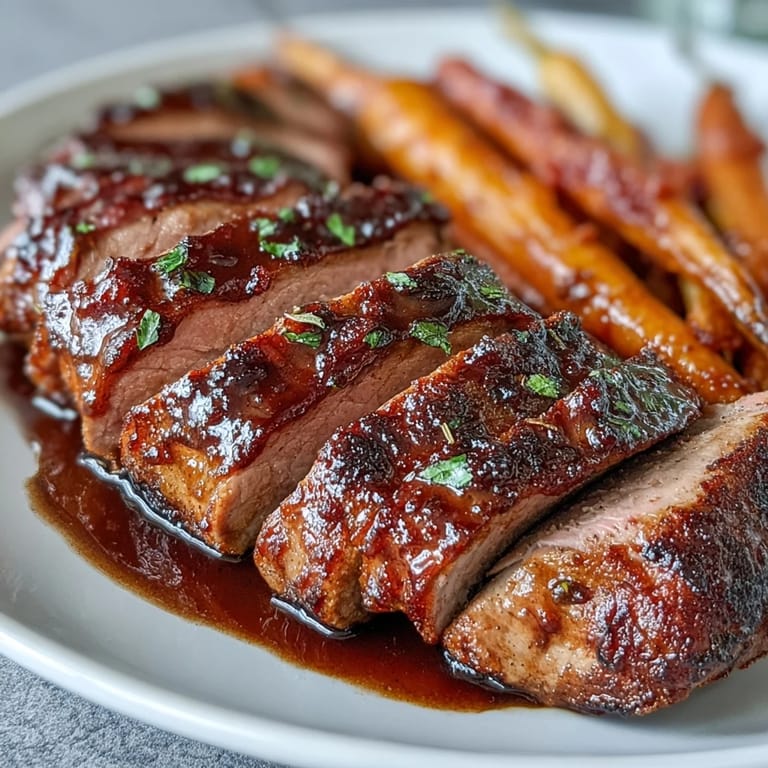
 This meal sits at that perfect intersection of looking impressive and being genuinely easy, which is why I keep coming back to it. It's one of those recipes that reminds you why cooking at home feels like such a gift.
Recipe FAQs
- → What temperature should the pork be cooked to?
Cook pork tenderloin until it reaches an internal temperature of 145°F (63°C) for safe and juicy results.
- → Can I use other vegetables instead of rainbow carrots?
Yes, regular carrots or parsnips are great substitutes and roast well alongside the pork.
- → How do I ensure the glaze sticks to the pork?
Pat the pork dry and rub with olive oil before applying the glaze in two stages during roasting for better adhesion.
- → Is resting the pork necessary after roasting?
Allowing the pork to rest for 5 minutes helps redistribute juices, resulting in a more tender and flavorful dish.
- → What herbs complement the glaze and carrots?
Dried or fresh thyme adds aromatic depth, but fresh chopped herbs can be sprinkled before serving for extra flavor.
- → Can this be prepared ahead of time?
Prepare the glaze and vegetables in advance, then assemble and roast just before serving for optimal freshness.