 Pinterest
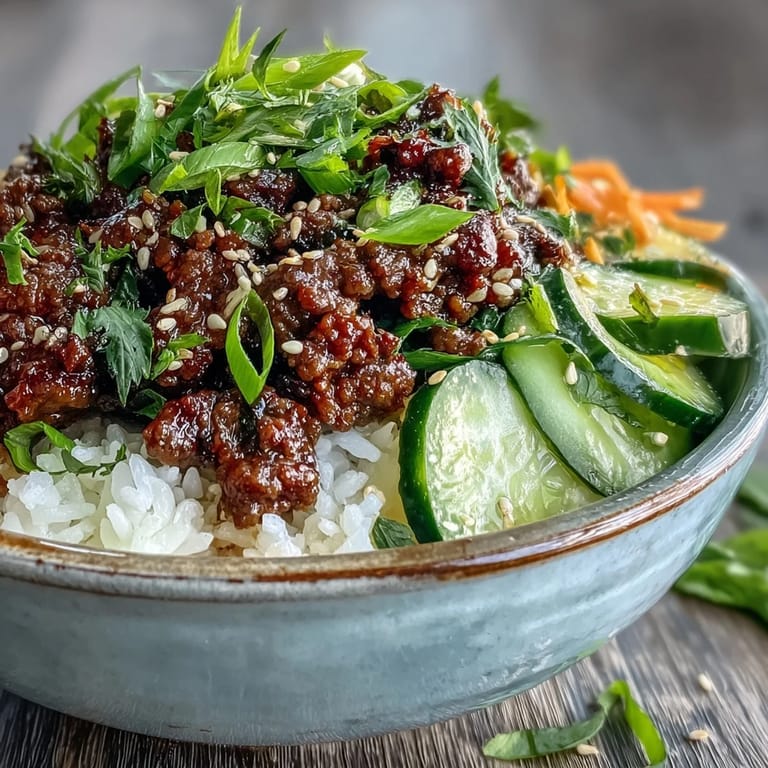
 My neighbor brought over this Korean ground beef bowl one Tuesday evening, and I watched her assemble it with such casual confidence that I knew I had to learn how to make it myself. The way the warm beef glistened with sesame oil while the pickled vegetables added this bright, sharp contrast felt like eating something both comforting and exciting at the same time. Within a week, I'd made it four times, each batch tasting better as I learned to trust the ginger and garlic to do their work. Now it's become my go-to when I want something that tastes restaurant-quality but comes together faster than I'd expect.
I made this for my sister when she was visiting and going through a phase of wanting to eat healthier, and watching her eyes light up when she realized something this delicious could also be good for her felt like I'd cracked some kind of code. She asked for the recipe before dessert, and now she texts me photos of her versions from across the country. That's when I knew this wasn't just another weeknight meal—it was something that could genuinely make people happy.
Ingredients
- Lean ground beef (500 g): The leaner the better here, since you're adding richness through sesame oil and the sauce will coat everything beautifully without excess grease.
- Soy sauce (2 tablespoons): Use tamari if you're keeping things gluten-free, and don't skip this—it's the backbone of the whole flavor profile.
- Toasted sesame oil (1 tablespoon): This is non-negotiable; regular sesame oil tastes flat by comparison, and toasted brings this warm, nutty depth.
- Brown sugar (1 tablespoon): It rounds out the saltiness and creates a subtle sweetness that makes people ask what your secret ingredient is.
- Fresh ginger (2 teaspoons, grated): Grate it right before using if you can—the difference between fresh and pre-grated is night and day.
- Garlic (3 cloves, minced): Mince it yourself and add it at the right moment so it becomes fragrant without burning and turning bitter.
- Gochujang or sriracha (1 teaspoon, optional): If you like heat, gochujang adds complexity that sriracha can't quite match, but both work.
- Green onions (2, sliced): Add half during cooking and save half for garnish so you get that fresh bite at the end.
- Sesame seeds (1 tablespoon): Toast them yourself if you have time—they'll smell incredible and taste deeper.
- Jasmine or cauliflower rice (4 cups cooked): Jasmine is traditional and slightly sweet, but cauliflower rice keeps things lighter if that's your preference.
- Rice vinegar (1/2 cup): This is sharper and cleaner than regular vinegar, so the pickles taste bright instead of harsh.
- Carrot, cucumber, and radish for pickling: The combination gives you sweetness, crunch, and peppery notes all at once.
Tired of Takeout? 🥡
Get 10 meals you can make faster than delivery arrives. Seriously.
One email. No spam. Unsubscribe anytime.
Instructions
- Start your pickled vegetables first:
- Whisk together rice vinegar, sugar, and salt in a bowl until the sugar dissolves completely. Add your julienned carrot, sliced cucumber, and radish, then toss everything until it's coated. Let it sit for at least 15 minutes while you handle the rest—the vegetables will soften slightly and take on that perfect tangy flavor.
- Get your rice going:
- Follow the package directions for jasmine or cauliflower rice, and keep it warm while you cook the beef. If you're using regular rice, this is a good time to start it if you haven't already.
- Brown the ground beef:
- Heat your skillet over medium-high heat and add the beef, breaking it apart with a spoon as it cooks for about 5 to 7 minutes until there's no pink left. Drain off excess fat if you see a pool of it—you want the meat to be flavorful, not swimming in grease.
- Build the sauce:
- Pour in your soy sauce, sesame oil, brown sugar, ginger, garlic, and gochujang if you're using it. Stir constantly for 2 to 3 minutes so the flavors meld and the whole skillet smells like you're cooking in a Korean restaurant. You'll see it become glossy and fragrant.
- Finish with fresh elements:
- Remove from heat and stir in the first batch of sliced green onions and sesame seeds. This keeps them fresh and prevents them from cooking down to nothing.
- Assemble your bowl:
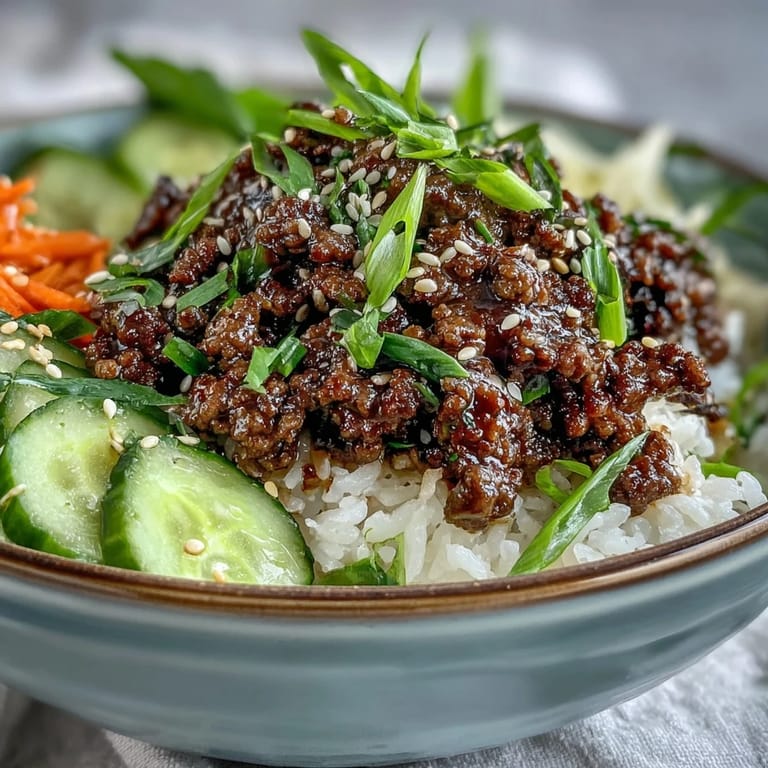
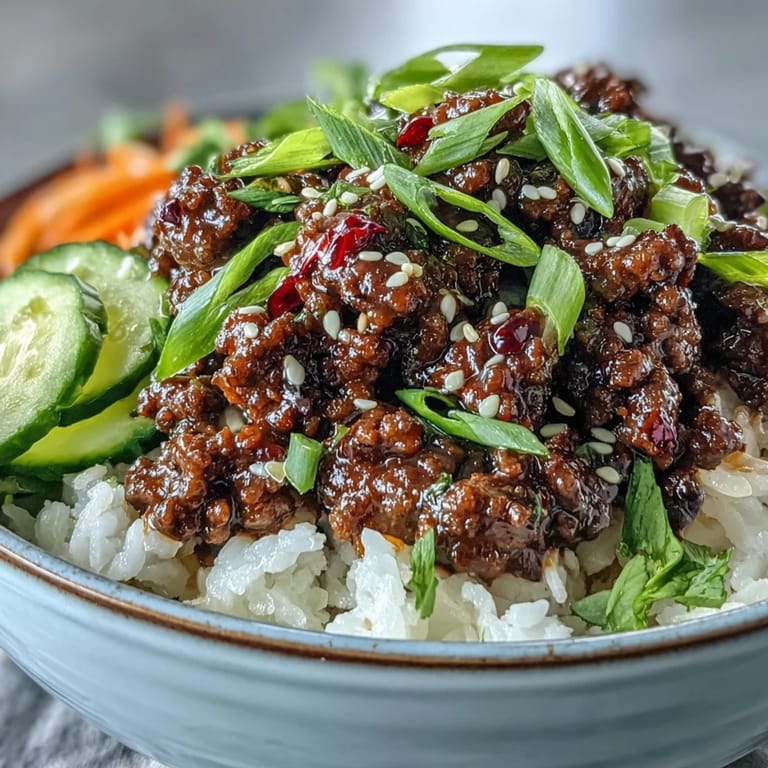
- Divide rice among bowls, pile the beef on top, and add a generous handful of pickled vegetables. Garnish with remaining green onions and extra sesame seeds, then eat immediately while everything's warm.
 Pinterest
 My daughter made this for herself after school one day, and the fact that she chose it over asking for takeout felt like the truest compliment. There's something about a bowl that lets everyone customize what they want—more vegetables, less rice, extra sauce—that makes it feel less like dinner and more like creating something of your own.
Why the Pickles Matter More Than You Think
People often think the pickled vegetables are just decoration, but they're actually doing the heavy lifting in this dish. That sharp, vinegary contrast cuts through the richness of the beef and sesame oil, and it prevents the whole bowl from feeling heavy or one-note. The longer those vegetables sit in the brine, the more they develop character—after 30 minutes, they're completely different from 15 minutes, so if you have time, let them go longer.
The Rice Base Decision
I spent months thinking regular jasmine rice was the only way to go until a friend brought over a version with cauliflower rice that actually made me rethink everything. The cauliflower version is lighter, lower-carb, and honestly lets the beef and vegetables shine even more since there's less starches competing for attention. Neither is wrong—it just depends on what you're in the mood for that night, so make it however feels right to you.
Customizations That Actually Work
This bowl is endlessly flexible, which is partly why it's become such a staple in my kitchen. Ground turkey or chicken swaps in seamlessly if beef isn't what you want that day, and I've even done it with crumbled tofu for vegetarian friends with great results. A fried egg on top adds richness and protein, and some nights I'll add a handful of shredded cheese, a drizzle of gochujang mayo, or even a dollop of Greek yogurt for tang.
- If you go vegetarian, use extra-firm tofu or tempeh and pan-fry it until it's golden before seasoning it exactly the same way as the beef.
- For a spicy kick, mix gochujang directly into the rice instead of just the meat, and it distributes the heat more evenly throughout every bite.
- If you're meal prepping, make the beef and pickles ahead of time and assemble fresh bowls each day so the rice stays fluffy.
 Pinterest
 This bowl has become one of those recipes I make without even checking the measurements anymore, and that's when you know something has truly become part of your kitchen routine. Make it once and you'll understand why.
Recipe FAQs
- → What makes this Korean-style?
The combination of gochujang (Korean chili paste), toasted sesame oil, soy sauce, fresh ginger, and garlic creates the authentic Korean flavor profile. Quick-pickled vegetables add the traditional tangy contrast found in Korean cuisine.
- → Can I use cauliflower rice?
Absolutely. Cauliflower rice works beautifully as a low-carb alternative. Simply cook according to package instructions and use it as the base instead of regular rice.
- → How spicy is this dish?
The spice level is mild to medium. Gochujang adds gentle heat, but it's optional. You can easily adjust by adding more gochujang or substituting sriracha for extra kick.
- → Can I meal prep this bowl?
Yes, the components store well for 3-4 days. Keep the beef, rice, and pickled vegetables separate in airtight containers. Reheat the beef and rice, then assemble fresh.
- → What protein alternatives work?
Ground turkey or chicken substitute nicely. For a vegetarian version, crumbled tofu or tempeh absorbs the seasonings beautifully and provides satisfying texture.
- → Do I need special ingredients?
Gochujang is the most specialized item, found in Asian markets or well-stocked grocery stores. It can be replaced with sriracha or omitted. Everything else is pantry staple.