 Pinterest
 There's a moment every summer when my farmer's market haul gets too heavy with eggplants, and I remember why the Sicilians built an entire dish around them. Pasta alla Norma isn't fussy or complicated—it's the kind of meal that tastes like it's been feeding families for centuries, because it has. The combination of charred eggplant, bright tomato sauce, and that salty crumble of ricotta salata creates something that feels both humble and elegant at the same time. My first attempt was slightly timid, worried I'd oversalt or undercook something, but the dish practically makes itself once you commit to the process.
I made this for my neighbor one evening when she'd just moved to the city and seemed overwhelmed by the transition. We sat on her still-mostly-empty patio, twirling pasta on our forks, and she told me about missing her grandmother's kitchen. There was something about this particular dish—simple enough to share without pretense, but complex enough to feel like someone had put real thought into it. By the time we finished, the conversation had shifted to something lighter, and the empty bowls said everything about comfort.
Ingredients
- Eggplant: Cut into 2 cm cubes so they crisp up rather than steam; I learned this the hard way after making mushy eggplant parmesan too many times.
- Extra-virgin olive oil: Use the good stuff you actually enjoy tasting, not the stuff hiding in the back of your pantry.
- Canned whole tomatoes: Crushed by hand rather than blended, they give the sauce texture and character that passata sometimes flattens.
- Ricotta salata: This is non-negotiable if you can find it; the saltiness is what makes this dish sing and distinguishes it from a hundred other pasta tomato recipes.
- Fresh basil: Add half to the sauce, reserve the rest for finishing because fresh basil added at the end tastes completely different from cooked basil.
- Garlic and onion: Finely chopped so they dissolve into the sauce and build flavor gradually rather than hitting you in waves.
- Rigatoni or penne: The tubes catch sauce in a way that long thin pasta never quite does; it's a small thing that matters.
Tired of Takeout? 🥡
Get 10 meals you can make faster than delivery arrives. Seriously.
One email. No spam. Unsubscribe anytime.
Instructions
- Get your oven ready and prep the eggplant:
- Heat your oven to 220°C while you cut the eggplant into generous cubes, toss them with olive oil and salt, and spread them on a baking tray in a single layer. The key is not crowding them; they need space to actually roast rather than steam.
- Roast until golden and tender:
- After 25–30 minutes, your kitchen will smell incredible and the eggplant should be turning golden at the edges. Turn them halfway through if you remember, but don't stress if you forget—they're forgiving.
- Build the sauce while eggplant roasts:
- In a large skillet over medium heat, warm olive oil and add your finely chopped onion, letting it soften for about 5 minutes while you listen to it sizzle. Add the garlic and chili flakes, cook for just a minute until fragrant, then crush the tomatoes by hand and add them with their juices.
- Let the sauce simmer and deepen:
- Season with salt and pepper, then let it bubble gently uncovered for 15–20 minutes, stirring occasionally so nothing sticks. You'll notice it thickening and the raw tomato flavor mellowing into something richer.
- Cook pasta to al dente:
- Bring a large pot of generously salted water to a rolling boil and cook your pasta according to package timing, tasting it a minute or two before you think it's done. Scoop out about half a cup of that starchy pasta water before draining—you'll need it later for silky texture.
- Combine everything gently:
- Add the roasted eggplant and most of your fresh basil to the tomato sauce, simmer for just 2 more minutes so the flavors introduce themselves. Toss in the drained pasta, adding splashes of reserved pasta water until the whole thing moves together like silk.
- Plate and finish with intention:
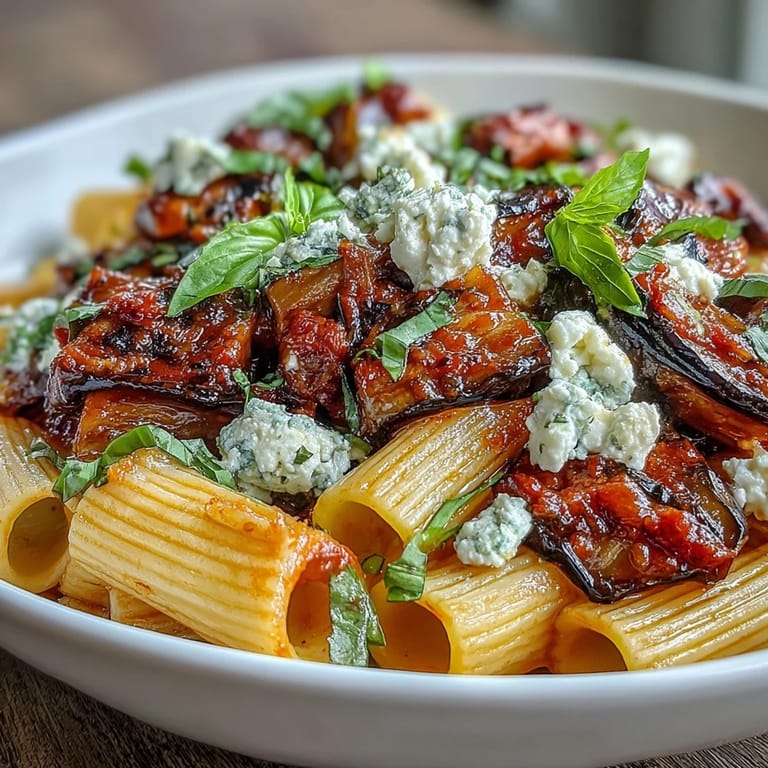
- Serve in shallow bowls so the sauce pools around the pasta, top generously with crumbled ricotta salata and those reserved basil leaves you held back. The hot pasta combined with cold salty cheese is where the magic actually happens.
 Pinterest
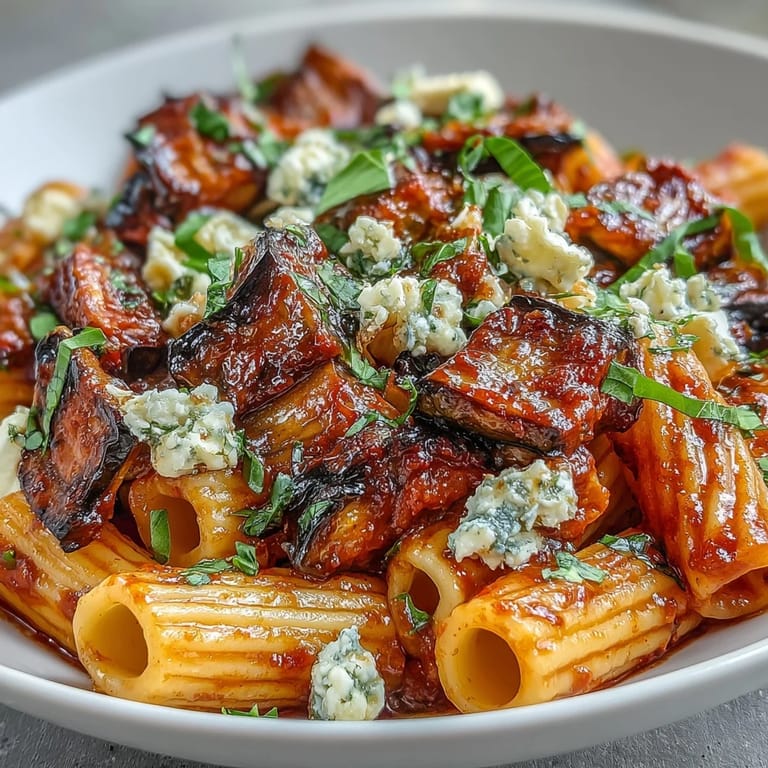
 This dish became my go-to proof that vegetarian cooking isn't about replacement or compromise. It's about building layers of flavor so deliberately that meat never even enters the conversation. Every element—the caramelized eggplant, the tomato sauce that tastes like it simmered all afternoon, the pasta with its little pockets of sauce—exists in perfect conversation with everything else.
Why This Dish Works
Pasta alla Norma represents something important about Italian cooking: that the best dishes come from respecting simple ingredients rather than overwhelming them. The eggplant gets its moment to shine through roasting, the tomato sauce is allowed to be just tomato sauce without fussy additions, and the ricotta salata isn't there to overpower but to punctuate. This balance is what makes the dish feel complete rather than like something is missing.
Timing and Temperature Matter
Getting your oven genuinely hot before the eggplant goes in makes all the difference between tender and crisp versus steamed and bland. I learned this by hovering anxiously over the oven window, watching the eggplant cubes slowly darken and shrink slightly as their water content evaporated. The hotter the oven, the quicker the caramelization, and the more interesting the texture becomes. Similarly, the tomato sauce needs time to simmer undisturbed so the flavors actually marry rather than just sitting next to each other.
Making It Your Own
This recipe is flexible enough to work with what you have on hand, which is probably why it's survived centuries of Sicilian kitchens. You can adjust the heat level, use different pasta shapes, or swap the cheese, and it still tastes authentic because the core of the dish—roasted eggplant, tomato sauce, fresh basil—remains unchanged. The beauty is that you're not following a rigid formula but understanding the logic underneath so you can adapt confidently.
- If you can't find ricotta salata, Pecorino Romano works beautifully and brings slightly more intensity.
- A pinch of dried chili flakes is optional, but it wakes up the whole dish without making it spicy.
- Fresh tomatoes in season are wonderful here, though canned tomatoes are honestly more reliable and work just as well.
 Pinterest
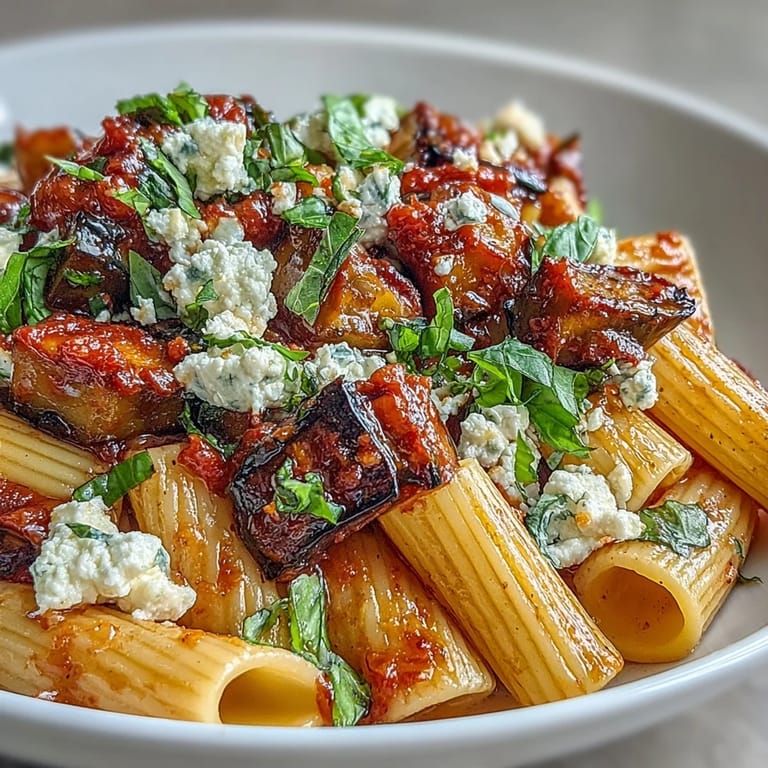
 This is the kind of dish that sits comfortably on the table, asking nothing of you except to enjoy it. Once you've made it once, it becomes part of your cooking vocabulary—something you'll reach for on ordinary Tuesday nights and bring to share when you want to feed people something that tastes like care.
Recipe FAQs
- → What makes Pasta alla Norma authentic?
Authentic Pasta alla Norma features three essential components: properly salted and roasted eggplant, a simple tomato sauce with garlic and basil, and ricotta salata for finishing. The dish originates from Catania, Sicily, and was named after Vincenzo Bellini's opera 'Norma.' The eggplant should be roasted until golden and creamy, never fried, and the sauce should remain rustic with crushed tomatoes rather than puréed.
- → Can I substitute ricotta salata?
While ricotta salata provides the traditional salty, crumbly finish, you can substitute with Pecorino Romano for a sharper taste or feta for a creamier alternative. For a vegan version, omit the cheese entirely or use a plant-based crumbly cheese. The key is maintaining that salty element that balances the sweet roasted eggplant and acidic tomatoes.
- → Why roast the eggplant instead of frying?
Roasting eggplant at high heat achieves the same golden, tender texture as traditional frying with significantly less oil and mess. The dry heat caramelizes the natural sugars, creating depth of flavor while keeping the eggplant creamy inside. This modern adaptation honors the original dish's spirit while making it more approachable for home cooks.
- → What pasta shapes work best?
Rigatoni and penne are ideal choices as their ridged surfaces and hollow centers capture the chunky tomato sauce and eggplant pieces perfectly. Other short pasta shapes like fusilli or maccheroni also work well. The key is choosing shapes with enough texture to hold the sauce, avoiding smooth varieties like spaghetti which won't distribute the ingredients evenly.
- → How do I prevent the eggplant from becoming bitter?
Select young, firm eggplants with shiny, unblemished skin. Cutting into uniform 2cm cubes ensures even cooking. Some traditional methods suggest salting the eggplant beforehand to draw out moisture, but fresh young eggplants typically don't require this step. Roasting at 220°C (430°F) quickly caramelizes the exterior, removing any potential bitterness while concentrating sweetness.
- → Can this be made ahead?
The tomato sauce with roasted eggplant can be prepared up to two days in advance and stored in the refrigerator. In fact, the flavors often improve after resting. Reheat gently while cooking the pasta, adding a splash of water if the sauce has thickened too much. Add fresh basil and ricotta salata just before serving to maintain their vibrant flavors and textures.