 Pinterest
 There's something about poaching fish that makes me slow down in the kitchen. One Tuesday evening, I was tired from work and wanted something that felt both simple and special, so I pulled together whatever looked good at the market: a beautiful fennel bulb, some bright oranges, and the most delicate cod fillets I could find. Twenty minutes later, my small apartment smelled like a Mediterranean coast I'd only read about, and I realized this was exactly the kind of dinner that doesn't need to be complicated to feel like a gift to yourself.
I made this for my parents last spring when they visited, and my mom kept saying she couldn't believe I'd made it myself. The kitchen filled with this golden steam, and when I brought the plates to the table, my dad actually paused before eating just to look at it. That's the kind of dish that reminds you why people gather around food in the first place.
Ingredients
- Fresh cod fillets (4, about 150 g each), skinless: Look for fillets that smell like the ocean, not fishy. They should be firm to the touch and a pale, translucent white. Avoid anything that looks dry at the edges or has a strong ammonia smell, which means it's past its prime.
- Large fennel bulb, thinly sliced (fronds reserved): Fennel brings this subtle licorice sweetness that pairs beautifully with fish and orange. Slice it lengthwise through the core to keep the layers intact while cooking, and save those feathery fronds because they're the prettiest garnish and taste delicate and bright.
- Orange, zested and thinly sliced: Use a microplane zester for the zest so you get only the fragrant oils without the bitter white pith. The slices go right into the poaching liquid, softening as they cook and infusing everything with subtle citrus.
- Shallot, thinly sliced: This is your quiet backbone flavor. Unlike raw onion, shallots turn mild and almost sweet when they meet the gentle heat of poaching.
- Garlic cloves, smashed: Smashing releases the flavor faster than mincing and lets you fish them out easily if you want to remove them later. Don't bother peeling off the papery skin if you're going to remove the clove anyway.
- Low-sodium fish or vegetable stock (500 ml): This is the foundation of your entire sauce. Good stock tastes like something, not like salt. Fish stock adds deeper flavor, but vegetable works beautifully if that's what you have.
- Dry white wine (120 ml): The acidity keeps everything bright and prevents the finished dish from feeling heavy. An unoaked Sauvignon Blanc or Pinot Grigio works perfectly here.
- Extra virgin olive oil (2 tbsp): Start with this smaller amount because you're not frying, you're cooking gently. Good olive oil matters because you'll taste it in the final sauce.
- Bay leaf: Just one. It's the whisper in the background, not the main voice.
- Sea salt and freshly ground black pepper: These are your final adjustments, not your main seasoning. The stock and other flavors do most of the work.
Tired of Takeout? 🥡
Get 10 meals you can make faster than delivery arrives. Seriously.
One email. No spam. Unsubscribe anytime.
Instructions
- Build your aromatic base:
- Heat the olive oil over medium heat until it shimmers slightly, then add the fennel, shallot, and smashed garlic. You want to hear a gentle sizzle, not an aggressive sear. Stir occasionally for about 3 to 4 minutes until the fennel turns translucent at the edges and softens just enough that it's starting to smell sweet. This isn't about browning, it's about releasing flavors gently.
- Create the poaching liquid:
- Add the orange slices, orange zest, bay leaf, wine, and stock all at once. Let it come to a gentle simmer where you see small bubbles rising slowly to the surface, not a rolling boil. This is the environment where delicate fish thrives.
- Season and nestle the cod:
- Pat the cod fillets dry with a paper towel so they poach instead of steam, then season lightly with salt and pepper on both sides. Arrange them in a single layer in the simmering liquid, nestling them among the fennel so they're mostly submerged but not crowded. The fish should have room to cook evenly.
- Poach low and slow:
- Reduce the heat to low, cover the pan, and let it cook undisturbed for 8 to 10 minutes. You'll know it's done when the fillets look opaque and the thickest part flakes apart easily when you touch it with a fork. The carryover heat will keep cooking the fish even after you remove it, so don't wait for it to fall apart.
- Transfer with care:
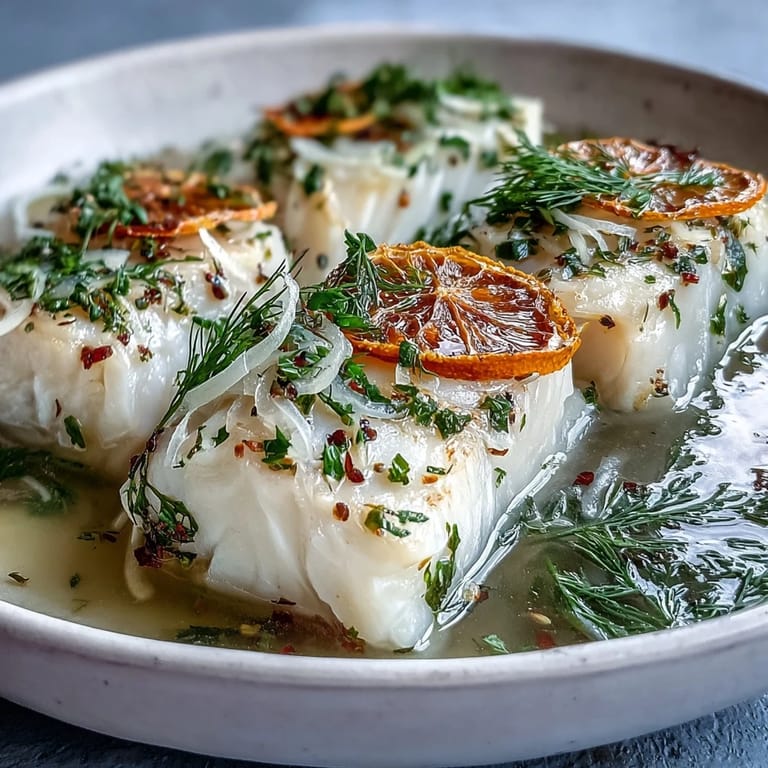
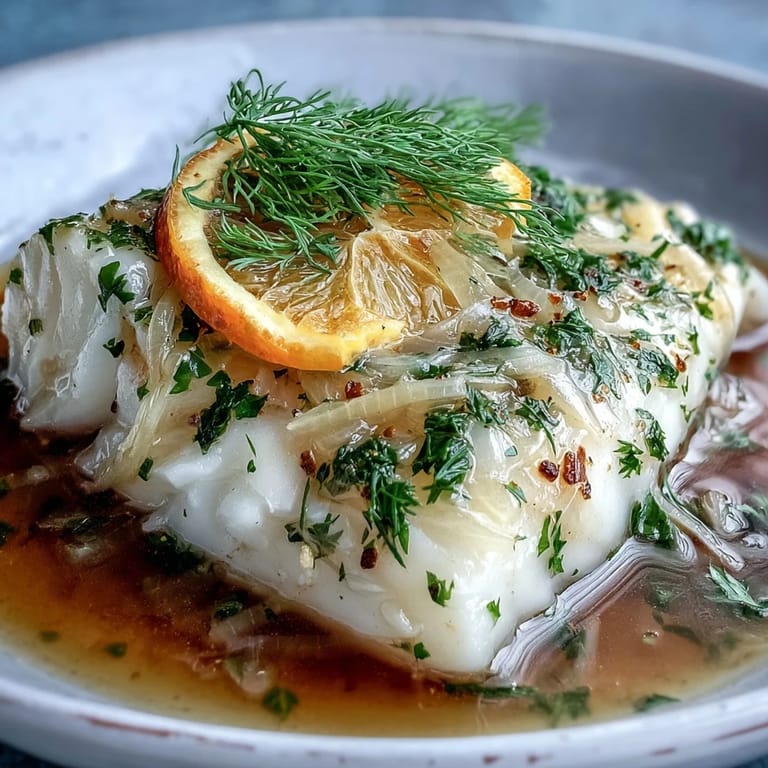
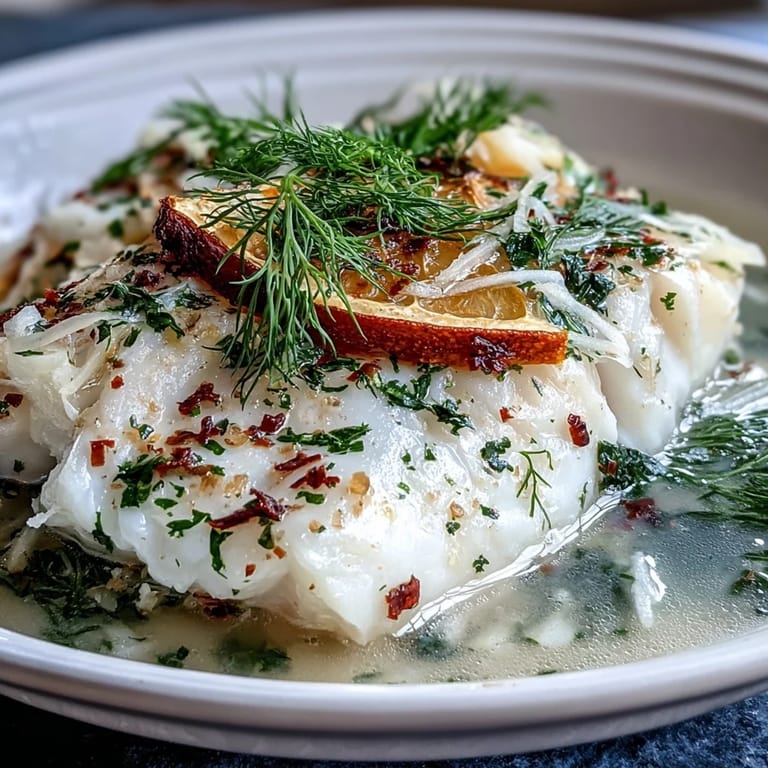
- Use a slotted spatula to scoop the cod and fennel onto your serving plates, cradling the fish so it doesn't break apart. Spoon some of the orange slices and a generous ladle of the silky poaching liquid over the top.
- Finish and serve:
- Scatter the reserved fennel fronds over everything, add a pinch of extra orange zest, grind some black pepper on top, and bring it to the table while the aroma is still in the air. The presentation should look effortless and intentional all at once.
 Pinterest
 A friend came to dinner once and asked if I'd learned to cook this in culinary school or something. I laughed and told her the truth: the ocean did most of the teaching, honestly. Every time I make it, I remember that cooking doesn't always have to be loud or complicated to say something true about caring.
What Makes This Dish Work
Poaching is one of those cooking methods that sounds fussy but is actually the opposite. It's forgiving, it's gentle, and it produces results that feel more refined than the effort involved. The key is understanding that you're not cooking with heat so much as with temperature and time working together. The poaching liquid becomes both the cooking medium and the sauce, so every ingredient that goes into that pan matters. There's no straining, no reduction, no last-minute whisking of butter.
Fennel and Orange, A Perfect Pair
Fennel on its own can taste a bit sharp and assertive, but orange has this way of softening it and making it almost floral. Together, they create this bright, layered flavor that doesn't overpower the delicate fish but makes you notice every bite. The sweetness of the orange balances the subtle bitterness of the fennel fronds, and the white wine adds acidity that keeps everything from feeling heavy or cloying. It's the kind of combination that sounds random on paper until you taste it and realize how obvious it always was.
Serving and Pairing Suggestions
This dish wants company but not competition. Crusty bread for soaking up the poaching liquid is essential, or steamed potatoes if you want something more substantial underneath. I've served it alongside a simple green salad dressed with lemon and good olive oil, and that works beautifully because it echoes the brightness without repeating it exactly. A chilled white wine from the same bottle you used for cooking ties everything together.
- The poaching liquid is too good to waste, so bring extra to the table and let people spoon it generously over everything.
- If your guests are the type who linger over dinner, make this on a night when you don't have to rush anywhere else.
- Leftover fish and broth can be gently reheated and tastes almost better the next day, though honestly there's rarely any left.
 Pinterest
 This is the kind of cooking that reminds me why I spend time in the kitchen at all. It's a small, true thing that tastes like you actually care.
Recipe FAQs
- → What type of fish works best for poaching?
White, mild-flavored fish like cod, halibut, haddock, or sea bass are ideal for poaching. They hold their shape well and absorb the delicate flavors of the poaching liquid without becoming overpowering.
- → Can I prepare this dish ahead of time?
While best served immediately, you can prepare the poaching liquid and sliced vegetables up to a day in advance. Store them refrigerated, then gently reheat before adding the fresh cod fillets.
- → What can I substitute for the white wine?
Replace white wine with additional fish stock, or use vermouth, Pernod for an anise kick, or simply omit it and increase the stock amount. The dish will still be flavorful.
- → How do I know when the cod is perfectly cooked?
The cod is done when it turns opaque throughout and flakes easily with a fork. Overcooking will make the fish dry and rubbery, so check at the 8-minute mark and remove from heat as soon as it's cooked through.
- → What sides pair well with this poached cod?
Steamed potatoes, crusty bread for soaking up the aromatic broth, or a light green salad with citrus vinaigrette complement this dish beautifully. Roasted vegetables or quinoa also work well.
- → Is fennel essential or can I use other aromatics?
Fennel provides the signature anise flavor and crunch, but you can substitute with thinly sliced leeks, celery, or fennel seeds if fresh fennel isn't available. The dish will still be delicious.