 Pinterest
 My abuela kept guava paste in her pantry year round, tucked behind jars of dulce de leche and membrillo. The smell of simmering guava still pulls me back to her tiny kitchen in Miami, where steam fogged the windows and neighbors knocked on the door when they caught the scent drifting through the hallway.
Last winter I made a triple batch during a snowstorm. My apartment smelled like tropical fruit while everything outside was buried in white. Friends who came over for wine left with small parchment wrapped blocks, texting me days later about eating it straight from the fridge with a spoon.
Ingredients
- 1 kg ripe guavas: Choose fruits that give slightly when pressed and smell intensely floral, underripe guavas will not develop that signature deep rose color
- 450 g granulated sugar: White sugar works best here since it lets the guavas natural pink hue shine without interference from molasses
- 2 tbsp fresh lemon juice: This brightens all that sugar and helps the paste set properly, bottled juice tastes flat in comparison
- 120 ml water: Just enough to help the guavas break down initially, too much liquid means hours of extra cooking time
Tired of Takeout? 🥡
Get 10 meals you can make faster than delivery arrives. Seriously.
One email. No spam. Unsubscribe anytime.
Instructions
- Prepare the guavas:
- Wash the fruit well, trim the blossom and stem ends, then quarter each guava. I leave seeds in during boiling since they add natural pectin but you can remove them now if you prefer an easier straining process later.
- Simmer the fruit:
- Place the guava quarters in a large saucepan with the water and bring everything to a boil over medium heat. Cover and let it simmer for 15 to 20 minutes until the fruit is completely soft and falling apart when pressed against the side of the pan.
- Strain the puree:
- Set a food mill or fine mesh strainer over a bowl and work the cooked guavas through, pressing firmly to extract all the pulp while leaving behind seeds and skins. The resulting puree should be smooth and vibrantly colored.
- Measure and combine:
- Measure your guava puree and aim for roughly equal parts puree and sugar. Return the puree to the pot, stir in the sugar and lemon juice, and place everything back over low heat.
- Cook to thickness:
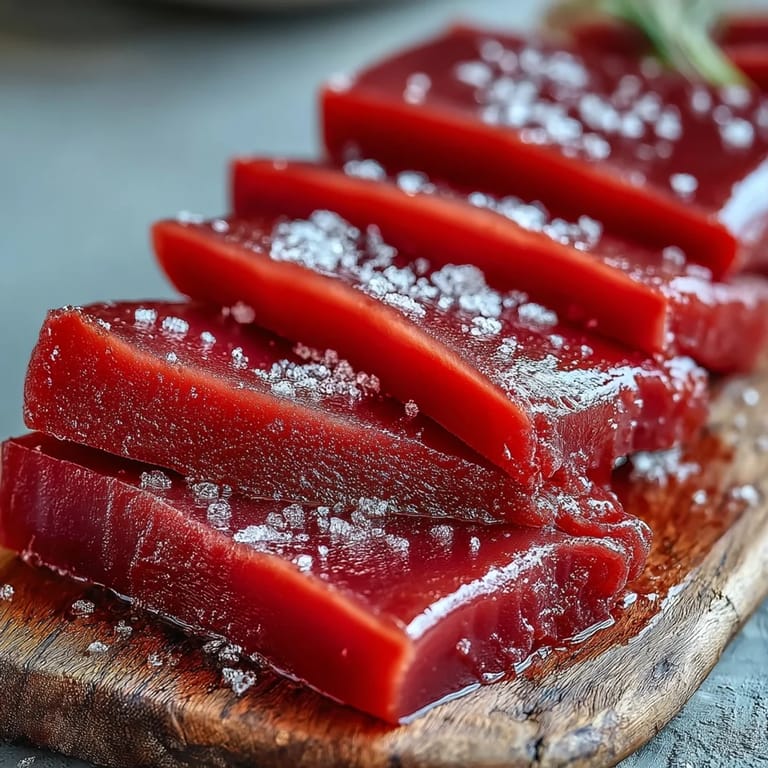
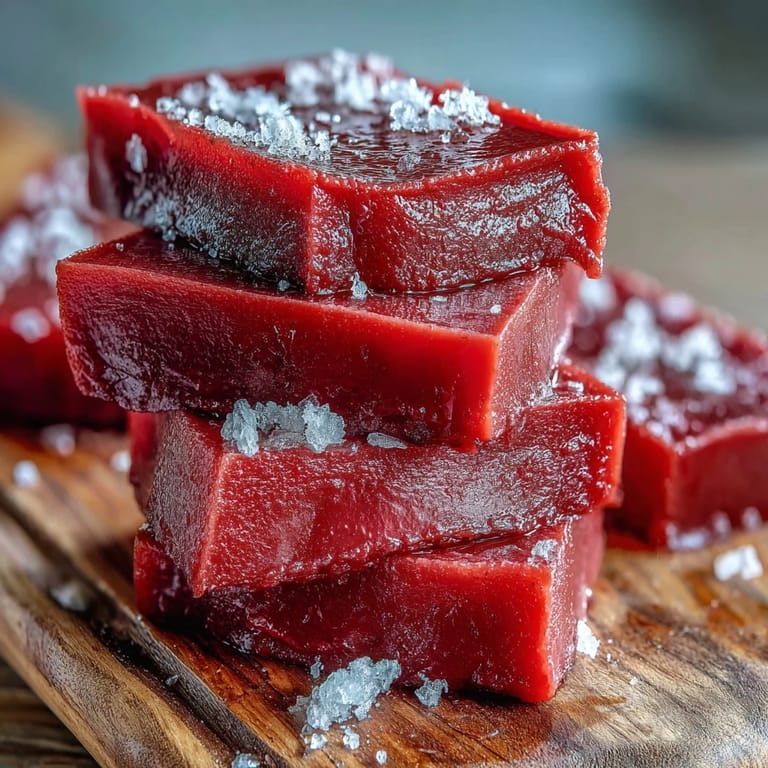
- Stir constantly for 40 to 50 minutes until the paste thickens dramatically and pulls away from the sides of the pan in a glossy mass. The mixture should hold its shape on a spoon rather than running off.
- Set and cool:
- Pour the thick paste into a parchment lined loaf pan or small baking dish, smoothing the top with an offset spatula. Let it cool completely at room temperature for 2 to 3 hours before unmolding.
 Pinterest
 A slice of this paste with Manchego and crackers has become my go to host gift. People always ask where I bought it, and their faces light up when I explain it came together in an afternoon with nothing but fruit and sugar.
Pairing Ideas
Beyond the classic cheese board, try melting small pieces into oatmeal or swirling them into plain yogurt. The paste also works beautifully in thumbprint cookies instead of jam, adding a tropical twist to a familiar treat.
Storage Secrets
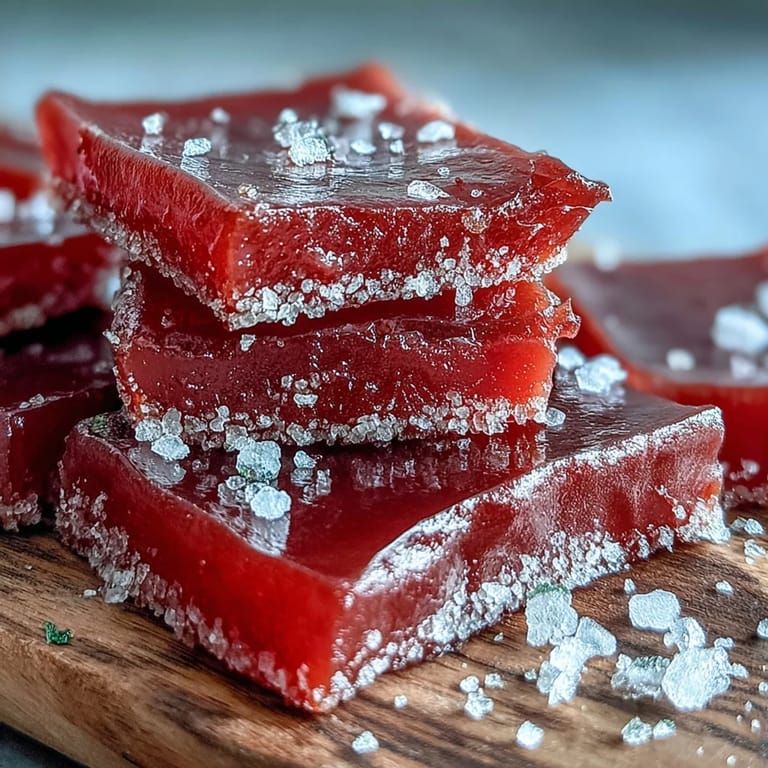
Wrap the cooled paste block tightly in parchment and then foil before refrigerating. It lasts for months and actually develops a deeper, more complex flavor over time. I have kept some for six months and it was still incredible.
Troubleshooting
If your paste never seems to thicken enough, keep cooking, it will get there eventually. Some guava varieties contain more water than others. If it is too thick and stiff before you pour it, stir in a tablespoon of water to loosen it slightly.
- A wooden spoon with a flat edge makes scraping the bottom of the pot much easier
- Line your mold with overhanging parchment paper handles for easy removal later
- Dip your knife in hot water between slices for clean cuts through the firm paste
 Pinterest
 There is something deeply satisfying about making something so elegant from such ordinary ingredients. A little patience and a few guavas become something worth savoring.
Recipe FAQs
- → What is guava paste used for?
Guava paste shines when paired with Manchego or other sharp cheeses on charcuterie boards. It also fills pastries, tops toast, or melts into warm desserts for tropical sweetness.
- → How do I know when the paste is done?
The paste is ready when it's thick, glossy, and holds its shape on a spoon. It should pull away from the sides of the pan as you stir.
- → Can I use frozen guavas?
Fresh guavas work best for optimal flavor and texture, but thawed frozen guavas can be used in a pinch. Adjust cooking time as needed to achieve proper thickness.
- → Why add lemon juice?
Lemon juice provides essential acidity that balances the sweetness, helps the paste set properly, and enhances the natural guava flavor.
- → How should I store guava paste?
Keep in an airtight container in the refrigerator for up to three months. For longer storage, cut into portions and freeze individually wrapped.
- → What if my paste is too thick?
If the paste becomes too firm, warm portions gently in the microwave or over low heat with a splash of water until spreadable again.